
Test & Laboratury Services Old
IP Protection Class Tests
TUVGLOBAL CERT® provides standard testing and reporting services for products within the scope of internationally accredited laboratories.
IP (Ingress Protection) class is an extremely important information code in all electrical and electronic products.IP protection level is the protection class that tells how resistant these devices are to external factors. Companies that manufacture electrical and electronic products are obliged to test the environmental conditions under which these devices operate safely, to determine clearly and to share this information with the users.
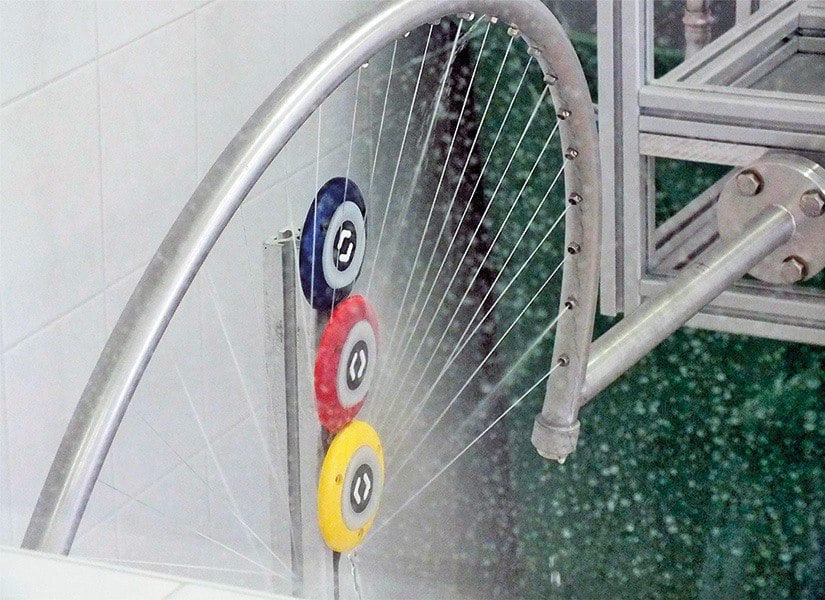
To determine the classification, it is necessary to perform IP Testing on the product . These tests are carried out according to EN 60529 or EN 3033 standard
The IP Classification system generally consists of a two-digit number. The first tab of this number indicates the level of protection of the electrical or electronic product against harsh factors coming from the external environment, and the second tab indicates the level of protection against liquid factors coming from the external environment. Devices must be in the appropriate protection class in order to ensure user safety, show working performance and strength. The higher these figures, the higher the protection class of the device.
On the labels of some devices, the IP protection class consists of three digits. The third step indicates the device's protection class against mechanical influences. However, this step is not used much.
The IP protection classification can be exemplified as follows:The
degree of protection of an electrical material belonging to the IP 54 protection class is: – The number 5 indicates resistance to solid objects – and the number 4 indicates resistance to liquids.
The most applied IP ratings in TUVGLOBAL CERT® are determined as IP40, IP 54, IP55, IP65, IP66, IP67, IP68.
EN 71 Toy Safety Tests
The European Union Regulation on the Safety of Toys-Stationery Materials published in 2009 (2009/48/EC) started to be handled in 2 steps as physical requirements in 2011 and chemical requirements in 2013. Toys and stationery products go through different processes from the design and manufacturing process to the storage stage, and all of these processes must meet the requirements of the directive.

The purpose of the Toy and Stationery Products Safety Directive is to predict the behavior of children, to determine the dangers that may arise during use, and to eliminate the damages caused by these hazards.
All of the test standards applied in the Toy Safety Directive in TUVGLOBAL CERT® are called EN-71 tests.
The contents of EN 71 tests are as follows:
- EN 71-1; (MECHANICAL AND PHYSICAL PROPERTIES)
This standard is applied to prevent compression, stinging, crushing and suffocation hazards caused by products that can be used by children, such as toys or stationery.
- EN 71-2; (FLAMMABILITY)
This standard is intended to extinguish a product when it catches fire without causing serious injury, or to ensure that you can recover from the burning product unscathed.
- EN 71-3; (MIGRATION OF CERTAIN ELEMENTS)
Migration of some elements (It guarantees that the chemical properties of the manufactured product do not affect the health of the individual who uses it. In the analysis made in this standard, the product compound is searched: Lead, Arsenic, Antimony, Cadmium, Chromium, Barium, Mercury, Selenium. Heavy metals in the product or exceeding the determined critical limits; It can enter the body with sweat and saliva. They manipulate minerals vital for bodily functions and displace them. And they prevent a person from performing their bodily functions properly.
These chemicals can also be found naturally in trace amounts. This trace amount of value is set as micrograms for each product.
|
Harmful Substance |
Limit Value (micrograms) |
|
Antimony |
0,2 |
|
Arsenic |
0,1 |
|
Barium |
25,0 |
|
Cadmium |
0,6 |
|
Chrome |
0,3 |
|
Lead |
0,7 |
|
Mercury |
0,5 |
|
Selenium |
5,0 |
- EN 71-4; SCIENCE AND NATURE EXPERIMENT TESTS
This standard analyzes the risks and safety of products designed as a science and nature experiment set.
- EN 71-5; CHEMICAL EXPERIMENT SETS
This standard analyzes the risks and reliability of chemical test sets.
- EN 71-6; ICONS AND SYMBOLS FOR AGE WARNINGS
This section is sign control Toys and stationery materials must carry some phrases and warnings on the product and packaging (age group, instructions, etc.), and the compliance of the signs on the product with the standard is checked.
- EN 71-7; FINGER PAINTS
This standard determines the limits of colorants, preservatives and bittering agents used in the manufacture of finger paint.
- EN 71-8; TOYS SUCH AS SWINGS, SLIDES, ETC. FOR INDOOR AND OUTDOOR USE
This Standard article controls information on the assembly, use and content of large toys.
- EN 71-9; ORGANIC/CHEMICAL INGREDIENT REQUIREMENTS
Defines the standards for Organic Compounds (Requirements).
- EN 71-10; PREPARATION AND PRESENTATION OF ORGANIC/CHEMICAL INGREDIENTS
This Standard article includes the preparation and presentation of organic or chemical components.
- EN 71-11; ANALYSIS METHODS OF ORGANIC-CHEMICAL COMPONENTS
This Standard defines the methods of analysis of organic or chemical compounds.
Click here to get a price quote for this service, info@tuvglobalcert.com
EN 62262 IK Impact Resistance Tests
the European standard for IK Impact Resistance Tests, is an international numerical classification that specifies the degree of protection of electrical devices against external mechanical impacts. It allows to determine the strength of an enclosure to protect its contents from external influences.
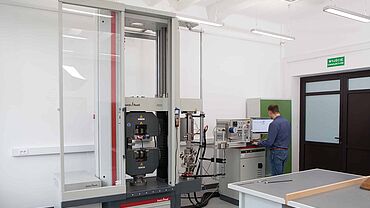
IK Ratings is an international numerical classification system that specifies the degree of protection provided for electrical or electronic devices against mechanical impacts from the external environment.
IK ratings enable the classification of devices according to the resistance of their kinetic energy to impacts.
IK00 Unshielded.
IK010.14 protected against joule effect.
It is equivalent to a mass impact of 0.25 kg falling from 56 mm on the affected surface.
IK020.2 protected against joule effect.
It is equivalent to a mass impact of 0.25 kg falling from 80 mm above the affected surface.
Protected against the effect of IK030.35 joules .
It is equivalent to a mass impact of 0.25 kg falling from 140 mm above the affected surface.
Protected against the effect of IK040.5 joules .
It is equivalent to the impact of a mass of 0.25 kg falling from 200 mm above the affected surface.
IK050.7 protected against joule effect.
It is equivalent to a mass impact of 0.25 kg falling from 280 mm on the affected surface.
IK061 protected against joule effect.
It is equivalent to a mass impact of 0.25 kg falling from 400 mm above the affected surface.
IK072 protected against joule effect.
It is equivalent to a mass impact of 0.5 kg falling from 400 mm above the affected surface.
IK085 protected against joule effect.
It is equivalent to a mass impact of 1.7 kg falling from 300 mm above the affected surface.
IK0910 protected against joule effect.
It is equivalent to a mass impact of 5 kg falling from 200 mm above the affected surface.
Protected against the IK1020 joule effect.
It is equivalent to a mass effect of 5 kg falling from 400 mm above the affected surface.
Fire Resistance and Response Tests
The Regulation on the Protection of Buildings from Fire was published in the Official Gazette in 2007 by the Ministry of Public Works and Settlement. With this regulation, it determines the processes and inspection principles of the measures to be taken in order to minimize the fire hazard in buildings, structures, facilities and enterprises used by public or private persons and organizations and to ensure that possible fires are overcome with minimum loss of life and property.
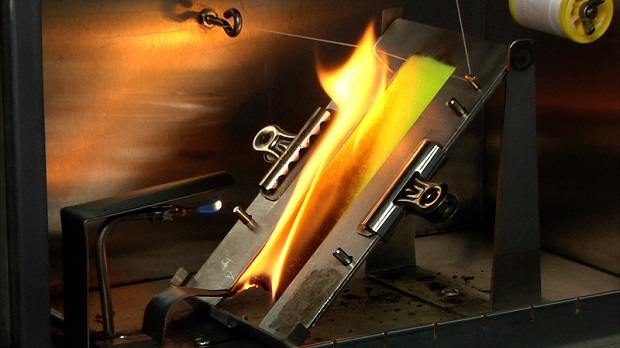
With the published regulation, it is stipulated that building materials that must have high fire resistance and fire resistance tests of these materials and their classification in accordance with the standard are required. However, despite these legal regulations, the expected effect has still not been achieved.
EU Standard EN 13501-1 Corresponds to the Fire Rating Procedure for All Products and Building Elements. Reaction to Fire according to EN 13501-1 standard; It is the contribution of a product to its own decomposition to a fire it is exposed to under certain conditions.
Products are considered in relation to their end-use areas and are evaluated in three main categories.
- Construction Products;
- Flooring;
- Linear Pipe Thermal Insulation Products;
Classifications of construction products are classified according to harmonized test methods. These are named A1, A2, B, C, D, E and F. Products rated in a certain class are considered to meet all the requirements of the subclasses.
Products classified as A1 and A2 are not considered flammable, for example, fiberglass, cement, concrete, minerals, fiberglass, glass, rock wool, ceramics, etc.
Materials Certified B to F Increase Combustion Levels in Ascending Order
Flooring products are leveled according to classes A1, A2, B, C, D, E and F, followed by the abbreviation of "fl" flooring.
With the unplanned construction, increasing population and increase in high-rise buildings in our country, fires and loss of life and property in fire have increased every year compared to the previous year.
In this case, the biggest share is the materials selected during the design and construction phase of the building. Within the scope of the "REGULATION ON FIRE PROTECTION OF BUILDINGS", which became mandatory in 2007, the Fire Reaction Classification Applied for Building Materials in Our Country is EN 13501-1 Standard and the European Criteria It Covers.
Some of the fire response standards are as follows;
EN 13823:2010:2011; Fire Reaction Tests for Construction Products-Exposed to Thermal Effect with a Single Combustion Element-Construction Products Other Than Floors
EN 15725:2011; Extended application reports on flame performance of building products and building elements
EN ISO 11925-2 :2004; Building Materials – Fire Resistance Tests – Flammability Under Direct Exposure to Flame – Part 2: Test with a Single Flame Source
EN ISO 9239-1:2005; Reaction to Fire Tests of Slabs – Determination of Combustion Behavior Using Radiant Heat Source
EN ISO 1716:2011; Fire Reaction Tests of Construction Products – Determination of Combustion Heat (Calorific Value)
EN ISO 1182 :2010; Reaction of Construction Products to Fire Tests – Non-Flammability Test
TSE CEN/TS 15117 :2006; Direct and Extended Application Guide
Click to get a price quote for this service info@tuvcert.com
SOME OTHER FIRE TEST STANDARDS
- FURNITURE TESTS-FLAMMABILITY OF UPHOLSTERED COMPOSITES FOR SEATING WITH SMOKING MATERIALS
- BS 5857-1:1979
- SOURCE 0
- SOURCE 1
- FURNITURE TESTS-FLAMMABILITY OF COMPOSITES FURNISHED FOR SEATING WITH FLAME SOURCES
- BS 5852-2:1982
- SOURCE 5-6-7
- IGNITION OF COMPOSITES FURNISHED FOR SEATING WITH SMOKING MATERIALS AND FLAME SOURCES
- BS 5852:2006
- FLAMMABILITY OF FURNISHED-FURNISHED BED BASES AND MATTRESSES -PART 1
- BS EN 597-1:1995
- EN ISO 597-1:1994
- EN 597-1:2001
- FLAMMABILITY OF FURNISHED-FURNISHED BED BASES AND MATTRESSES -PART 2 (MATCH FIRE EQUIVALENT)
- BS EN 597-2:1995
- EN ISO 597-2:1994
- EN 597-2:2001

- FLAMMABILITY OF FURNITURE COVERED WITH FURNITURE FLOORING PART 1
- BS EN 1021-1:2006
- EN 1021-1:2006
- EN 1021-1:2006
- ISO 8191-1:1987
- FLAMMABILITY OF FURNITURE COVERED WITH FURNITURE-FLOORING PART 2 (MATCH FIRE EQUIVALENT)
- BS EN 1021-2:2006
- EN 1021-2:2006
- EN 1021-2:2006
- ISO 8191-2:1988
- EVALUATION OF FLAMMABILITY OF BEDDING MATERIALS SMOLDERING CIGARETTE AS IGNITION SOURCE
- ISO 12952-1:2010
- BS EN 12952-1:2010
- EN 12952-1:2010
- EN ISO 12952-1:2010
- EVALUATION OF FLAMMABILITY OF BEDDING MATERIALS IGNITION SOURCE MATCH FLAME EQUIVALENT
- ISO 12952-2:2010
- BS EN 12952-2:2010
- EN 12952-2:2010
- EN ISO 12952-2:2010
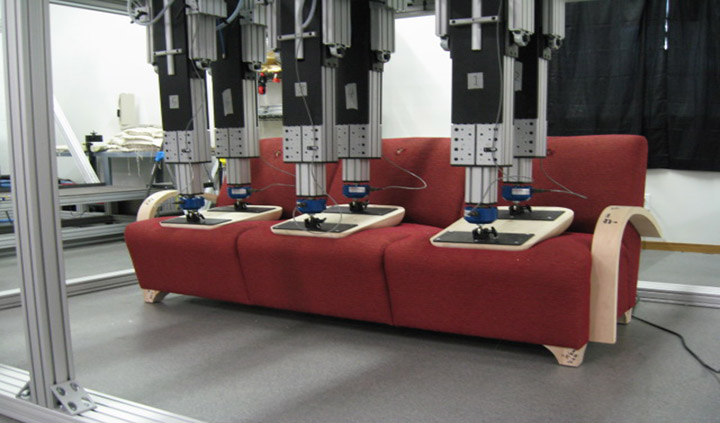
- SPECIFICATION FOR IGNITION RESISTANCE OF BEDS, SOFAS AND BED BASES
- BS 7177:1996
- FOR HOME USE
- UK NIGHTWEAR FLAMMABILITY TEST
- UK NIGHTWEAR SAFETY
- REGULATION:1985
- CHILDREN'S BEDDING CLOTHES BURNING BEHAVIOR
- BS EN 14878:2007
- EN 14878:2007
- BURNING PERFORMANCE OF FABRICS AND COMBINATIONS USED IN PAJAMAS AND DRESSING GOWNS
- BS 5722:1984
- COMBUSTION TEST OF FABRICS AND FABRIC COMBINATIONS USED IN BED CLOTHES
- BS 5722:1991
- TEXTILES – BURNING BEHAVIOR OF EVENING WEAR
- CEN TC/248
- IGNITIBILITY TEST METHOD OF PRIMARY AND SECONDARY IGNITION SOURCES AND BEARINGS
- BS 6807:1986
- SELECTION 2
- TEXTILE – COMBUSTION PROPERTY DETERMINATION OF COMBUSTION PROPERTIES OF READY-TO-WEAR FABRICS
- BS EN 1103:2005
- EN 1103:2005
- EN 1103:2005
- NON-FLAMMABILITY TEST WITH A SMALL FLAME APPLICATION IN VERTICALLY PLACED FABRICS AND FABRIC COMBINATIONS
- BS 5438:1976
- DETECTION OF COMBUSTION BY APPLYING SMALL FLAME TO THE BOTTOM CORNER OR SURFACE OF VERTICALLY PLACED TEXTILE FABRICS
- BS 5438:1989
- CLOTHING FABRICS BURNING TEST
- US CPCS CFR 16 PART 1610
- COMBUSTION TEST ON CLOTHING AND CLOTHING FABRICS
- ASTM D 1230-94
- DETERMINATION OF IGNITION PROPERTIES OF VERTICAL TEST SAMPLES
- ISO 6940:2004
- BS EN ISO 6940:2004
- EN 6940:2004
- 5775 EN ISO 6940:2004
- MEASUREMENT OF FLAME SPREAD PROPERTIES OF VERTICAL TEST SAMPLES
- ISO 6941:203
- BS EN ISO 6941:2003
- EN ISO 6941:2003
- EN ISO 6941:2003
- DETERMINATION OF FLAME PROPAGATION WHEN USING A LARGE COMBUSTION SOURCE IN VERTICALLY PLACED TEST PARTICLES
- BS EN 13772:2003
- EN 13772:2003
- EN 13772:2004
- TEXTILE AND TEXTILE PRODUCTS COMBUSTION PROPERTIES – CURTAINS – CLASSIFICATION SCHEME
- BS EN 13773:2003
- EN 13773:2003
- EN 13773:2004
- COMBUSTION REQUIREMENTS FOR DRAPERY FABRICS, DRAPES AND WINDOW BLINDS
- BS 5867-2:1980 TYPE A
- BS 5867-2:1980 TYPE B
- BS 5867-2:1980 TYPE C (50 Washes) on Products Used for DHSS
- BS 5867-2:2008-TYPE A
- BS 5867-2:2008 TYPE B
- BS 5867-2:2008 TYPE C (50 Washes)
- LIVING ROOM CURTAINS AND CURTAINS BURNING FEATURE (SMALL FLAME)
- BS EN 1001:1996
- EN 1001:1995
- EN 1001:2003
- LIVING ROOM CURTAINS AND CURTAINS BURNING FEATURE
- BS EN 1102:1996
- EN 1102:1995
- EN 1102:2003
- DETERMINATION OF THE EFFECTS OF A SMALL IGNITION SOURCE ON TEXTILE FLOOR COATINGS (HOT METAL NUT METHOD)
- BS 4790:1987
- CLASSIFICATION AND EVALUATION OF TEXTILE FLOOR COATINGS TESTED ACCORDING TO BS 4790
- BS 5287:1988
- TEXTILE FLOOR COVERINGS-COMBUSTION CHARACTER – TABLET TEST AT AMBIENT TEMPERATURE
- ISO 6925:1982
- BS 6307:1982
- ST 5193:1987
- SURFACE FLAMMABILITY OF CARPETS AND RUGS
- 16 CFR 1630:2011
- SURFACE FLAMMABILITY OF SMALL CARPETS AND RUGS
- 16 CFR 1631:2011
- TARPAULIN CLOTH – USED FOR MILITARY PURPOSES
- ST 3596:1981 CHAPTER 2.3.7
- PROTECTIVE CLOTHING – HEAT AND FLAME PROTECTION TEST METHOD FOR CLASSIFIED FLAME SPLASH
- BS EN ISO 15025:2002
- EN ISO 15025:2002
- ISO 15025:2000
- EN ISO 15025:2006
- PROTECTIVE CLOTHING-HEAT AND FLAME PROTECTION TEST METHOD FOR CLASSIFIED FLAME SPLASH
- EN 5321994
- BS EN 532:1995
- EN 532:1996
- PROTECTIVE CLOTHING-HEAT AND FLAME PROTECTION-MATERIALS AND MATERIAL EQUIPMENT WITH LIMITED FLAME SPREAD PROPERTIES
- EN 533:1997
- BS EN 533:1997
- EN 533:2002
- PROTECTIVE CLOTHING-HEAT AND FLAME PROTECTION-MATERIALS AND MATERIAL EQUIPMENT AND CLOTHING WITH LIMITED FLAME SPREADING PROPERTIES
- ISO 14116:2008
- BS EN ISO 14116:2008
- EN ISO 14116.2008
- EN ISO 14116:2010
- DETERMINATION OF COMBUSTION BEHAVIOR OF INTERIOR MATERIALS IN MOTOR VEHICLES
- DIN 75200:1980
- FEDERAL MOTOR VEHICLE SAFETY STANDARDS FLAMMABILITY OF INTERIOR MATERIALS
- FMVSS 302
- ROAD VEHICLES.MACHINERY AND TRACTORS USED IN AGRICULTURE AND FORESTRY – INTERNAL MATERIALS COMBUSTION BEHAVIOR
- ISO 3795:1989
- ISO 3795:1999
- FLAME SPREAD FEATURE FROM SAMPLES IGNITED FROM HORIZONTAL EDGES
- TS 6346:1989
- TOY SAFETY: PART 2
- BS EN 72-2
- EN 71-2
- EN 72-2